You open your closet. You stare. You grab the same navy blazer you always grab, pair it with the same two shirts you always rotate, and tell yourself it’s fine.
It’s not fine. Not because you look bad—but because you’ve stopped thinking about it. And in an office where the person who gets noticed is often the one who looks like they chose their outfit rather than defaulted to it, that matters more than you’d think.
Here’s the good news: corporate dressing for men has never been more forgiving. The rigid suit-and-tie code is dead in most industries. What replaced it is something better—a set of formulas you can rotate, remix, and make your own without spending a fortune or a single anxious morning.
Below are 18 corporate outfits for men, organized by the moments that actually define your workweek. Each one is built on real styling logic, not just “wear a blazer and hope.” And the third formula in the boardroom section? It’s the one most men skip—and it’s the one that changes how people read you.
Let’s get dressed.
The Boardroom Formulas (When You Need to Command the Room)

These are the outfits for the days that matter: the presentation, the client pitch, the meeting with the people who decide things. The goal here isn’t fashion. It’s signal.
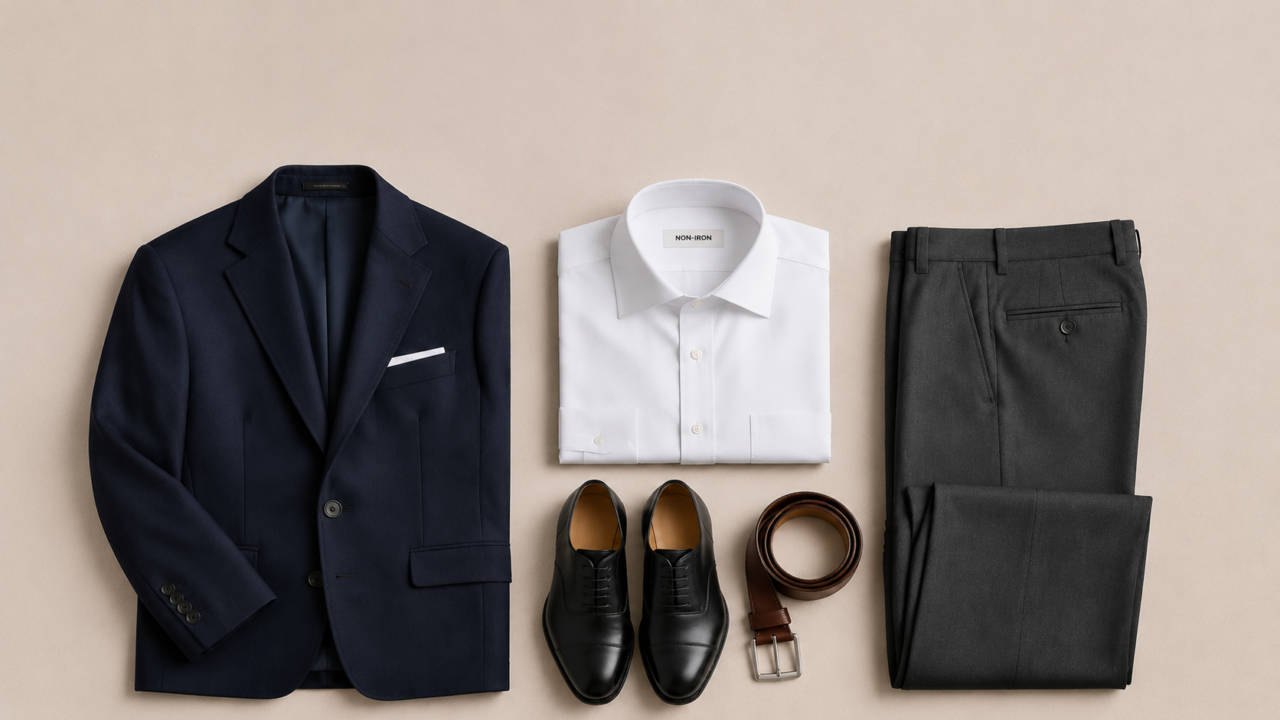
1. The Navy Suit, Done Right
A navy two-piece suit is the single most versatile piece of clothing a working man can own. But “versatile” doesn’t mean “boring.” The difference between a man in a navy suit and a man in that navy suit is fit and finish.
The formula: Navy suit, white shirt (non-iron, always), black cap-toe oxfords, and a tie in burgundy or deep green. Match your belt to your shoes. That’s it. No pocket square unless you know what you’re doing with it.
Why it works: navy reads authoritative without the severity of black, and the tie adds just enough formality to signal you took the meeting seriously. If you only own one suit, make it this one .
2. Charcoal Double-Breasted for High-Stakes Days
When the room is senior and the stakes are high, a double-breasted charcoal suit does something a single-breasted can’t: it closes the silhouette and creates a wall of fabric that reads as contained power.
The formula: Charcoal double-breasted suit, white shirt, navy or burgundy tie, black leather shoes. Keep everything else quiet. The cut is the statement .
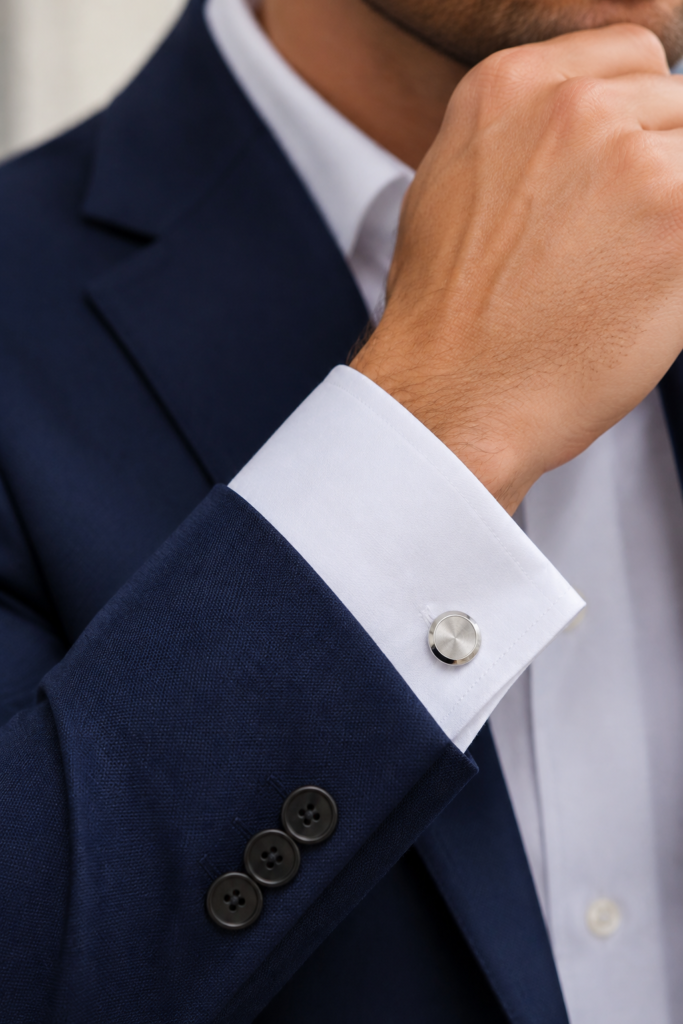
3. The French Cuff Play (The One Most Men Skip)
This is the third formula. And it’s the one that separates the men who “wear suits” from the men who understand them.
The formula: Any well-fitted suit you already own + a white French-cuff shirt + simple silver cufflinks.
That’s it. No new suit required. The French cuff adds a small flash of deliberate detail—visible when you gesture, when you shake hands, when you adjust your sleeve. It says you thought about this morning. It says you care about the details people only notice subconsciously. And it costs almost nothing to add .
Pin-worthy takeaway: The cheapest upgrade to any suit isn’t a new jacket—it’s the shirt no one sees until you move.
The Everyday Corporate Rotation (Monday Through Thursday)
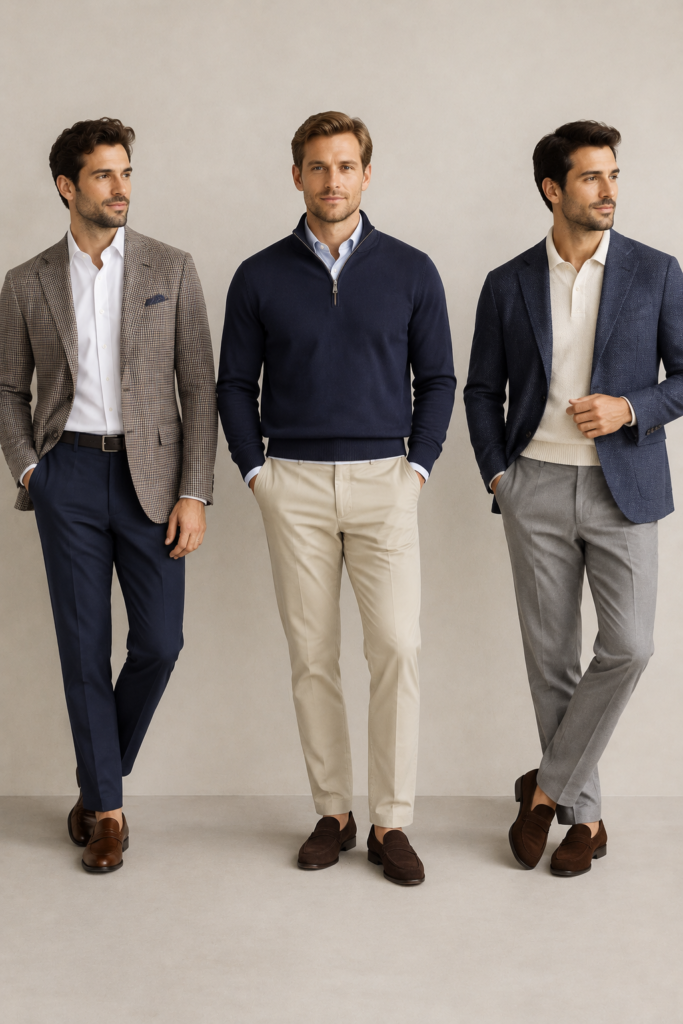
These are the workhorses. The outfits that get you through a normal week looking intentional without looking like you’re trying too hard. Rotate these four and you’ll never repeat yourself in a week.
4. The Sport Jacket + Trousers Formula
A textured sport jacket—herringbone, Prince of Wales check, or a subtle windowpane—worn over a dress shirt and dress trousers is the most reliable business-casual outfit in existence. The pattern does the work; you just have to show up.
The formula: Checked sport jacket, light blue dress shirt, charcoal or navy trousers, brown leather derbies. No tie. The collar of the shirt does the formal lifting .
5. The Quarter-Zip Over Shirt
If your office runs cold or your style leans conservative, the quarter-zip sweater over a collared shirt is the quiet achiever of corporate dressing. It adds polish without the formality of a jacket, and it photographs beautifully.
The formula: Navy or charcoal quarter-zip, white or light blue dress shirt underneath (collar visible), dress trousers, leather shoes. This is the outfit that makes people think you’re more senior than you are .
6. The Knit Polo + Blazer
Here’s where corporate dressing gets interesting. A structured knit polo—collar that holds its shape, not a floppy weekend polo—under an unstructured blazer is modern, comfortable, and completely office-appropriate in most environments.
The formula: Navy or cream knit polo, grey or tan blazer (soft shoulder, no padding), dark trousers, loafers. The lack of a tie is a choice, not a mistake .
7. The Monochrome Navy Look
Dressing in one color family isn’t lazy. It’s strategic. A navy blazer over a navy knit, paired with navy or charcoal trousers, creates an unbroken vertical line that makes you look taller and more composed. The trick is varying the texture so it doesn’t read as a uniform.
The formula: Navy wool blazer, navy fine-gauge knit (not the same fabric as the jacket), charcoal trousers, black or dark brown shoes. Different textures, one palette .
Smart-Casual Fridays (And Offices That Dropped the Suit)
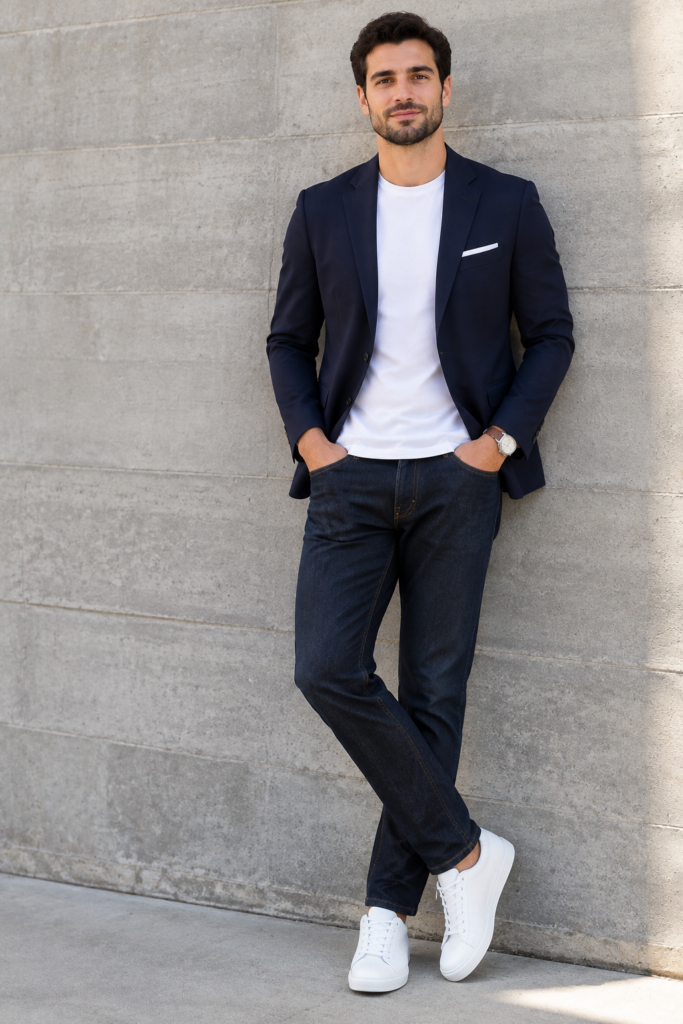
Friday dressing is where men either shine or fall apart. The rule is simple: one step down from the rest of your week, not two. Jeans are fine. Sneakers are fine. But together with a graphic tee? That’s not Friday. That’s Saturday.
8. The Blazer + Dark Denim Formula
A structured blazer worn over a simple crewneck tee with dark, clean denim is the outfit that proves casual doesn’t mean careless. The blazer elevates the tee; the denim grounds the blazer.
The formula: Navy or grey blazer, plain white or grey crewneck (no logos), dark slim or straight jeans (no distressing), leather Chelsea boots or clean white sneakers. Pick one casual element and keep the rest sharp .
9. The Overshirt Layering
An overshirt—a shirt-jacket hybrid in wool, flannel, or heavy cotton—layered over a plain tee is the modern answer to “I want to look like I tried but not like I tried tried.” It’s comfortable, practical, and reads as deliberate.
The formula: Navy or olive overshirt, white tee underneath, dark jeans or chinos, boots or clean sneakers. Roll the sleeves once if the office allows .
10. The Merino Crewneck + Trousers
A fine-gauge merino crewneck over a collared shirt (collar out) with tailored trousers is the Friday outfit for men who want to look smart without a jacket. It’s warm, it’s clean, and it works in almost any office culture.
The formula: Grey or navy merino crewneck, white shirt underneath, charcoal or navy trousers, loafers or derbies .
11. The Polo + Chinos Reset
If your office is genuinely casual but you still want to look like an adult, a structured polo with tailored chinos and clean leather sneakers is the floor, not the ceiling. The collar does the work.
The formula: Navy or white structured polo, tan or olive chinos, white leather sneakers (clean), no-show socks. Keep the fit slim but not tight .
The Detail Layer (Outfits 12–15)
These aren’t full outfits—they’re the finishing moves that make the other 17 work harder. Ignore these and you’ll look fine. Nail these and you’ll look noticed.
12. The Turtleneck Under Blazer
Swap the shirt and tie for a fine-gauge turtleneck under your blazer. It’s sleeker, it’s warmer, and it signals that you understand the difference between dressing formally and dressing well.
The formula: Charcoal or black merino turtleneck, navy or grey blazer, dark trousers, Chelsea boots. Ideal for evening events and offices with a creative bent .
13. The Trench Coat Commute
Your commute outfit matters. A camel or navy trench over your work clothes solves the “cold morning, warm office” problem while looking like you walked out of a film about a man who has his life together.
The formula: Camel trench (belted, mid-length), your regular work outfit underneath, leather bag. The coat is the outfit .
14. The Leather Jacket, Office Edition
This one’s for creative offices and men who know their dress code is flexible. A clean leather jacket—no studs, no zips everywhere—worn over a shirt and tie with suit trousers is the high-low move that reads as confidence, not confusion.
The formula: Black or dark brown leather jacket (minimal hardware), white shirt, navy trousers, black boots. No tie required, but it doesn’t hurt .
15. The Statement Shirt (Subtle Version)
A shirt with a chest pocket detail, a textured fabric, or a subtle pattern does the work of a tie without the tie. Pair it with your plainest trousers and let the shirt speak.
The formula: Textured or detailed shirt (white or pale blue base), charcoal trousers, simple leather shoes. No tie. The shirt is the point .
The Travel & Client Day Formulas (Outfits 16–18)
Some workdays aren’t in the office. They’re in airports, client lobbies, and restaurants where you need to look the same at 9 a.m. and 9 p.m.
16. The Navy Suit + Polo
The business-travel hack: swap the shirt and tie for a white piqué polo under your navy suit. It’s comfortable on a plane, appropriate in a meeting, and sharp enough for dinner without a change.
The formula: Navy suit, white piqué polo (collar sits over the lapel), dark loafers, no tie. The polo does everything a shirt does, with less creasing .
17. The Knit + Trousers Travel Uniform
A fine-gauge knit over an open-collar shirt with tailored trousers and comfortable leather shoes is the outfit that survives a flight, a meeting, and a taxi without looking like you slept in it. The knit is the jacket replacement.
The formula: Navy or camel fine-gauge knit, white shirt (collar visible), grey trousers, loafers or derbies on a rubber sole .
18. The Client Dinner Elevation
Take your daytime outfit and add one thing: a dark, unstructured blazer. The blazer signals “this meeting is now social,” and it costs you nothing but a layer.
The formula: Your daytime shirt and trousers + navy or charcoal unstructured blazer + leather shoes. If you wore a tie during the day, pocket it. If you didn’t, you’re already done .
The Five-Piece Rule (What Actually Matters)
If you strip away all 18 outfits, you’re left with five pieces that do 80% of the work:
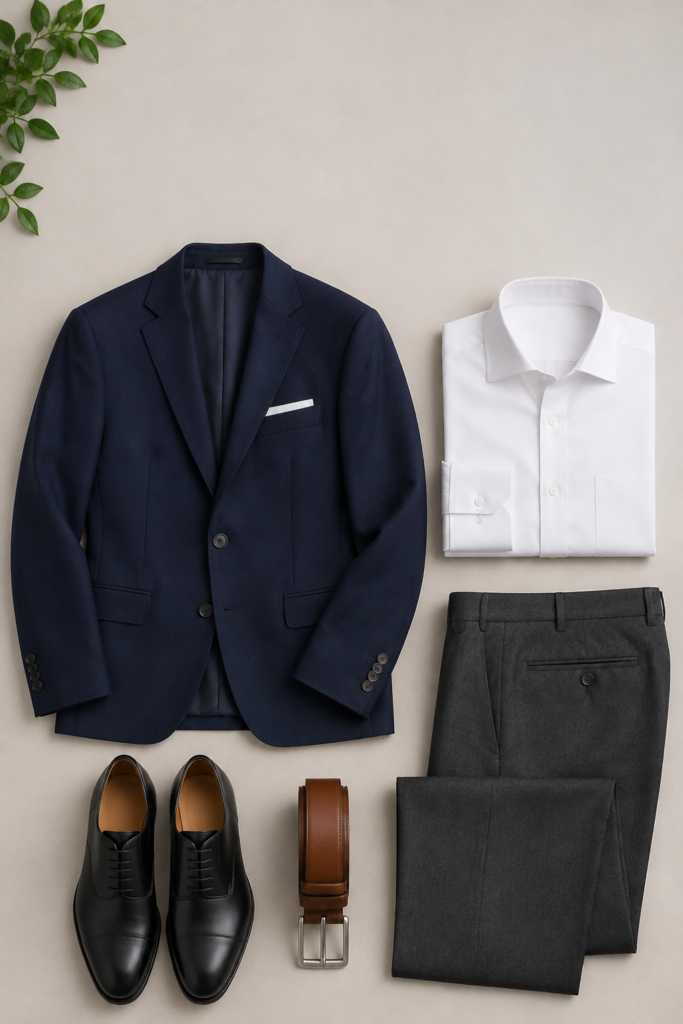
1. A navy blazer with a soft shoulder. Not a suit jacket. A blazer. It goes with everything from jeans to dress trousers.
2. Two pairs of trousers that fit. One charcoal, one navy. Tailored, not tight. If they need a belt to stay up, they don’t fit.
3. Three shirts. White, light blue, and one with texture or a subtle pattern. Non-iron if you’re smart.
4. One pair of leather shoes you can walk in. Oxfords or derbies. Brown goes with more than you think.
5. One knit. A fine-gauge crewneck or quarter-zip in navy or grey. It replaces a jacket more often than you’d expect.
Everything else—the ties, the pocket squares, the statement pieces—is seasoning. The five pieces are the meal.
FAQ
What counts as “corporate” in 2026?
Corporate dress has split into two lanes: traditional (suits, ties, leather shoes) and modern (blazers, knitwear, tailored trousers, clean sneakers). Most offices now fall somewhere in between. The safe bet is to dress one step more formal than your boss on your first day, then calibrate .
Can I wear jeans to a corporate office?
Depends entirely on your office. If you see senior people in denim, yes—but keep it dark, clean, and fitted. Pair it with a blazer or a structured polo, never a graphic tee. If you’re unsure, don’t .
How many outfits do I actually need for a workweek?
Five. One for each day. But if you build them from the five-piece rule above, you’ll have more than five combinations without trying. The goal isn’t a bigger wardrobe—it’s a smarter rotation.
What’s the biggest mistake men make with corporate outfits?
Fit. Not style, not color, not price. Fit. A $100 blazer that fits beats a $1,000 blazer that doesn’t. Get your jackets and trousers tailored. It’s the cheapest upgrade you’ll ever make .
Do I need a tie in 2026?
Only if your office requires one or your client expects one. In most corporate environments, the tie is optional. But if you wear one, wear it well—tied properly, reaching the belt, with a knot that suits your collar .
Before You Close This Tab
You don’t need 18 outfits. You need three or four that you trust, a few details that elevate them, and the confidence to stop defaulting to the same tired combination every morning.
Start with the navy blazer. Add the quarter-zip. Get your trousers tailored. Wear the French cuff shirt once and see if anyone notices. (They will.)
Save this guide to your Pinterest workwear board. Come back to it on Sunday night when you’re staring at your closet. And the next time you open that door, you’ll know exactly what to reach for.
Your morning self will thank you.
Learn More About Us Style Verves